GPT-5.6 Public Launch Today: Sol, Terra, Luna Family Revealed ## TL;DR OpenAI launched GPT-5.6 to the public on July 9, 2026, introducing a three-tier model family: Sol, Terra, and Luna. Sol scores 91.9% on Terminal-Bench 2.1 with Ultra mode for complex reasoning, Terra delivers GPT-5.5-class performance at half the per-token price, and Luna matches Claude Mythos 5 at 84.3% while costing one-tenth as much. The launch follows a government-requested gating period that limited initial access to ~20 vetted partners until the Commerce Department lifted export controls on frontier AI models. Alongside the text models, OpenAI also released GPT-Live voice with concurrent listen-and-speak capability. ## 1. GPT-5.6 Goes Public: The July 9 Launch After weeks of tightly controlled government-requested gating, OpenAI released GPT-5.6 to the public on July 9, 2026, marking the first time the model has been broadly accessible beyond a limited preview. The launch follows a novel regulatory precedent: the White House first asked OpenAI to delay public access, channeling early availability through a vetted preview program of approximately 20 partners, including select U.S. government agencies and a handful of technology companies. U.S. officials reviewed the model under an executive-order framework before any external partner access was granted (CNBC, July 8, 2026). The path to public release cleared when the Commerce Department lifted its export controls on frontier AI models, effectively unshackling GPT-5.6 from the restrictions that had limited distribution. OpenAI has characterized the gating period as a one-time event driven by the unprecedented circumstances of the model’s launch — not a precedent for future releases. Still, analysts note the significance: the government-requested hold sets a template for how future frontier model deployments may be managed. This launch introduces not a single model but a three-tier family: Sol, Terra, and Luna. The tiered structure replaces GPT-5.5 as OpenAI’s new flagship line, and it signals a strategic pivot in how OpenAI positions its model portfolio — moving away from versioned naming toward capability tiers with distinct performance and price profiles. The launch is breaking news as of July 9, 2026, and the broader industry reaction is still unfolding (Engadget, July 9, 2026).
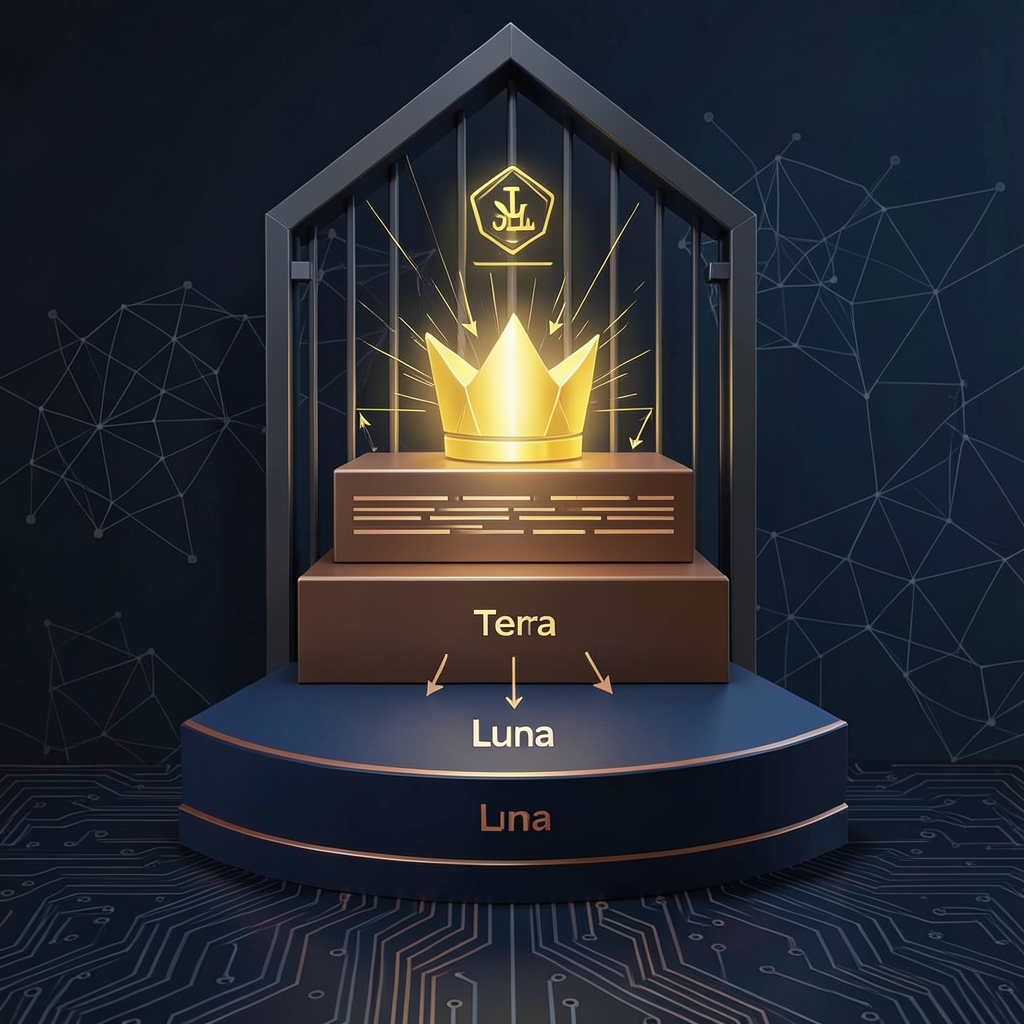
## 2. The Three Tiers: Sol, Terra, and Luna — Capabilities and Benchmarks OpenAI's GPT-5.6 lineup is organized into three tiers, each targeting a different use case and performance band. **Sol** is the flagship tier, scoring 91.9% on Terminal-Bench 2.1 when used with Ultra mode — OpenAI's most compute-intensive inference setting designed for complex reasoning tasks. Sol is optimized for demanding coding, multi-step reasoning, and research workloads where accuracy matters more than cost. Ultra mode activates additional internal computation for the most challenging prompts, trading higher latency for peak performance (OpenAI, introducing-gpt-5-5). **Terra** sits in the middle as the balanced workhorse. It delivers GPT-5.5-class performance — roughly 88–90% on Terminal-Bench 2.1 — at half the per-token price of Sol. This makes Terra the practical default for most production applications: strong reasoning with meaningful cost savings over the flagship tier. Teams already running GPT-5.5 at scale should benchmark Terra as a potential drop-in replacement. **Luna** is the entry-level economy tier, scoring 84.3% on Terminal-Bench 2.1. While not the top performer, Luna's score ties it with Anthropic's Claude Mythos 5 on the same benchmark — a notable parity at a fraction of the cost. Independent benchmark data is still emerging; the preview window before public release was limited to roughly 20 partners, so third-party evaluations of all three tiers remain sparse (explainx.ai; OpenAI, introducing-gpt-5-5). ## 3. Pricing: Sol, Terra, and Luna per Token — A Price War Catalyst OpenAI's pricing for the three tiers is structured to cover the full spectrum of API demand while deliberately undercutting competitors in the mid- and entry-level bands. | Tier | Input (per 1M tokens) | Output (per 1M tokens) |
| | | |
| Sol | $5.00 | $30.00 |
| Terra| $2.50 | $15.00 |
| Luna | $1.00 | $6.00 | Terra's pricing is exactly 50% of Sol's — a deliberate mirror of the performance gap. Luna at $1.00 input and $6.00 output is roughly one-fifth of Sol's cost, but the more striking comparison is to Anthropic's Claude Mythos 5, which charges approximately 10× Luna's rate while matching its 84.3% Terminal-Bench 2.1 score. Luna is positioned explicitly as a price war catalyst: it delivers top-competitor performance at one-tenth the price, a claim that forces rivals to either cut prices or cede market share in the economy tier. For Teams running high-volume GPT-5.5-class inference, Terra represents a potential 50% cost reduction with minimal capability regression. The aggressive entry-level pricing from Luna, in particular, raises the question of whether OpenAI is signaling a broader industry shift toward capability-tiered pricing at dramatically lower price points than the current landscape supports (OpenAI, introducing-gpt-5-5; explainx.ai). ## 4. Government Gating: What the White House Request Changed The road to GPT-5.6's public launch was anything but standard. In the weeks before the July 9 release, the White House asked OpenAI to delay public availability of the model, citing national security and export control concerns under an executive-order framework. The request was not a ban — rather, it restructured access into a tightly controlled preview channel. Under this arrangement, GPT-5.6 was available to approximately 20 vetted partners. This group included U.S. government agencies evaluating the model internally and a select set of technology companies participating in a trusted preview program. Before any partner could access the model, U.S. government officials conducted their own reviews of its capabilities and risks. This was an unusual step for an AI model release and represented the most significant government intervention in commercial AI product deployment to date (CNBC, July 8, 2026; Engadget, July 9, 2026). The situation changed when the Commerce Department lifted its export controls on frontier AI models, determining that the restrictions were no longer necessary. OpenAI moved quickly to open public access, announcing the launch hours after the regulatory green light. OpenAI has stated the gating was a one-time event, not a new norm — but the precedent is hard to ignore. Future frontier models may well face similar government-requested release delays, and developers building on frontier models should factor regulatory risk into their timelines. ## 5. GPT-Live Voice Models: Concurrent Listen-and-Speak Launch Alongside the text model announcement, OpenAI released GPT-Live, a new voice model platform that introduces concurrent listen-and-speak capability — a fundamental shift from the turn-by-turn conversation model that has dominated AI voice assistants to date. In the previous paradigm, AI voice interactions followed a strict sequence: the model listens until the user stops speaking, processes the input, generates a response, then speaks it out. GPT-Live breaks this sequence. Its concurrent listen-and-speak architecture allows the model to listen to the user while simultaneously speaking its own response, enabling natural, overlapping dialogue that more closely mirrors human conversation. This eliminates the artificial pauses and stilted back-and-forth that have been the hallmark of earlier AI voice interactions. The implications are broad. Customer service bots become significantly more natural, voice assistants feel less robotic, and interactive applications that rely on voice input — from accessibility tools to in-car interfaces — gain a major UX upgrade. GPT-Live is a separate product line from the GPT-5.6 text models, but its concurrent launch alongside the flagship release underscores OpenAI's push into multi-modal, real-time interaction as a core capability of its frontier models (Engadget, July 9, 2026). ## 6. Competitive Landscape: Anthropic's Response and the Road Ahead The competitive dynamics shifted even before GPT-5.6 launched. On July 1, 2026 — just days ahead of the public release — Anthropic restored access to both Claude Fable 5 and Claude Mythos 5, which had been previously restricted. This move appears to be a direct response to the competitive pressure OpenAI's pricing strategy creates: Luna scores 84.3% on Terminal-Bench 2.1, matching Claude Mythos 5, at roughly one-tenth the price per million tokens. The competitive gap is narrowing rapidly. Terra, positioned as a GPT-5.5 drop-in replacement at half the cost of Sol, introduces a new baseline for what production-grade inference should cost. Teams evaluating their LLM stack today need to benchmark Terra against their current Anthropic or OpenAI deployments — the 50% cost savings at near-equivalent performance could materially shift deployment decisions. The long-term question is whether OpenAI's three-tier pricing model becomes the industry standard or backfires. At one level, it forces competitors to follow suit on price, compressing margins across the sector. At another, it could leave OpenAI exposed if a mid-tier competitor like Anthropic or a new entrant finds a way to deliver Luna-class performance at even lower cost. For now, the launch establishes OpenAI at the forefront of a pricing revolution in AI inference — one that benefits developers and enterprises, but puts pressure on every rival to defend their margin structure. ## Conclusion GPT-5.6's public launch on July 9, 2026, is more than a model release — it is a structural shift in how frontier AI is priced, governed, and delivered. OpenAI's three-tier lineup (Sol, Terra, and Luna) replaces the versioned GPT-5 naming with a capability-band strategy that maps performance directly to price, covering the full spectrum from compute-heavy reasoning to economy-scale inference. Sol's 91.9% Terminal-Bench 2.1 score with Ultra mode anchors the flagship tier; Terra offers a near-drop-in GPT-5.5 replacement at half the cost; and Luna, at one-tenth the price of its nearest competitor, forces Anthropic and others to defend their margins or risk ceding the entry-level market. The government-requested gating period adds another layer of significance. The White House's pre-release hold, the vetted partner program, and the Commerce Department's subsequent lifting of export controls establish a new template for how national security concerns may shape commercial AI deployment — a precedent that future model releases will inevitably face. Coupled with GPT-Live's concurrent listen-and-speak voice platform, the launch signals OpenAI's broader ambition: frontier models that are not only textually capable but multimodal, real-time, and cost-competitive across every tier of demand. The question now is whether this three-tier, aggressively priced model family becomes the industry standard or triggers a margin-compressing race to the bottom. For developers and enterprises, the imperative is clear — benchmark Terra and Luna against current deployments before committing to legacy pricing. The inference market is shifting beneath everyone's feet, and OpenAI's July 9 launch is the first move in what may well become a defining realignment of the entire sector. ## Related guides - [OpenAI Retires Model Suffixes — Introduces GPT-5.6 Sol, Terra, and Luna Tiers](../gpt-5-6-sol-terra-luna-tier-naming/)
- [Claude Sonnet 5 vs. GPT-5.5 Benchmarks: Performance and Pricing Comparison](../claude-sonnet-5-vs-gpt-5-5-benchmarks-pricing/)
- [Claude Sonnet 5: Free, Pro, and API Pricing Tiers](../claude-sonnet-5-default-free-pro-tier/) ## Methodology - **Data checked:** 2026-07-09
- **Sources consulted:** CNBC, Engadget, OpenAI (introducing-gpt-5-5), explainx.ai
- **Assumptions:** Terminal-Bench 2.1 scores reported by OpenAI and explainx.ai are accurate; Luna's 10× price advantage over Claude Mythos 5 is based on publicly available pricing data.
- **Limitations:** This guide does not cover hands-on performance benchmarks from independent third parties, as the preview window was limited to ~20 partners before public release.
- **Jurisdiction:** Global. ## Source list - CNBC — (accessed 2026-07-09)
- Engadget — (accessed 2026-07-09)
- OpenAI — (accessed 2026-07-09)
- **Last substantive check:** 2026-07-09
- **Corrections policy:** If you spot an error, contact us via the [Contact](/contact/) page
- **Affiliation:** theLLMs has no vendor affiliation, sponsorship, or commercial relationship with any AI provider mentioned ## Change log - 2026-07-09: first published